
AI has become one of those words people use without really meaning the same thing. Some say it with excitement. Some say it with fear. Most say it without fully understanding what they’re talking about.
Scroll LinkedIn for five minutes or listen to any casual office conversation, and you’ll hear wild claims about AI taking over jobs, thinking like humans, or magically fixing broken businesses. The problem isn’t AI itself – it’s the stories we keep telling about it.
Let’s talk about a few of those stories that really need to stop.
Myth 1: AI is going to replace humans

The first one is the dramatic favourite. This idea sounds good in headlines, but it falls apart in real life. What AI actually replaces are tasks people already hate doing. Rewriting the same email. Sorting data. Repeating the same answers. No one starts their day excited to repeat the same boring task over and over.
In most workplaces, AI isn’t about pushing people out. It’s about taking care of the work that makes jobs feel unnecessarily tiring. The kind of work that slows teams down without adding much value. People are still needed to decide what actually matters and what doesn’t. If AI were truly replacing humans, hiring wouldn’t still be happening everywhere, but it clearly is.
Myth 2: AI Thinks Like Humans

Another common belief is that AI somehow “thinks.” It doesn’t. Not even close. AI doesn’t understand meaning. It doesn’t know why something is funny, risky, sensitive, or inappropriate unless it’s been shown patterns before. It predicts. That’s it. For sure, very advanced prediction, but still prediction.
This is usually where people go wrong. They either trust AI way too much or panic about it for no real reason. Once you stop thinking of AI as some kind of brain and start treating it like a tool, a lot of the confusion disappears.
Myth 3: AI is always right
Myth 2 leads straight to another risky assumption that AI is always right. Well, it’s not. AI can sound confident while being completely wrong. It can miss context. It can misunderstand tone. It can confidently give outdated or irrelevant information. Anyone who’s actually used AI for real work knows this already.
That’s why the smartest users don’t copy-paste AI output blindly. They review it. Edit it. Question it.
Myth 4: AI is only for tech people
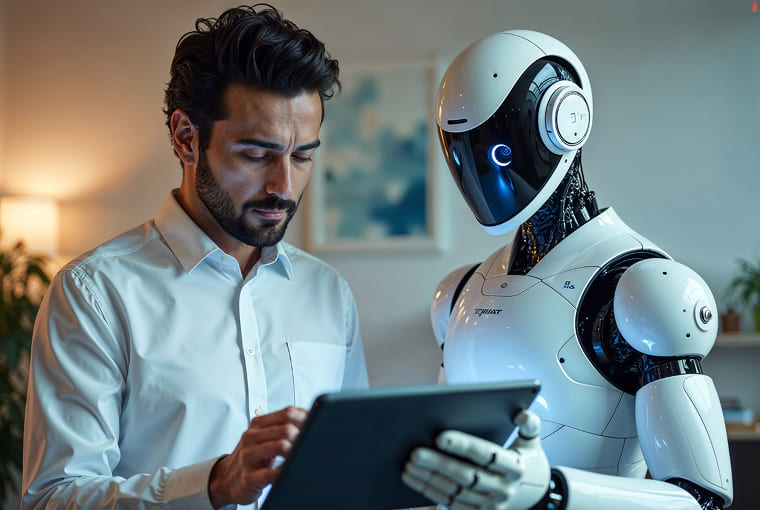
There’s also this idea that AI is only meant for tech people. That stopped being true a while ago. Most people using AI today aren’t developers. They’re writers, marketers, founders, teachers, and freelancers. Most people don’t know what’s happening in the background, and honestly, they don’t need to.
You’ve never had to understand how something is built just to use it properly. Hardly anyone can explain how the internet actually works either, but that’s never stopped anyone from using it every single day.
Myth 5: AI is expensive for small businesses
There’s also this belief that AI is expensive and only meant for big companies. That might’ve been true years ago. These days, it’s often small businesses and solo professionals using AI more freely than big companies. A lot of the tools are cheap, flexible, or even free, which makes experimenting easy, something people didn’t really expect a few years ago.
Smaller teams feel it more. When you don’t have extra people or extra hours, even small time savings start to matter, and that’s usually where AI ends up helping.
Myth 6: Once you use AI, the work is done

And then there’s the assumption that once AI is involved, the work is basically finished. That’s usually when people realise it doesn’t work that way. People who expect AI to magically solve problems usually walk away unimpressed. People who treat it like an assistant usually stick with it.
AI isn’t the future people should fear. It’s just another tool we’re still learning how to use properly.
The sooner we stop exaggerating it – in both directions – the more useful it actually becomes.